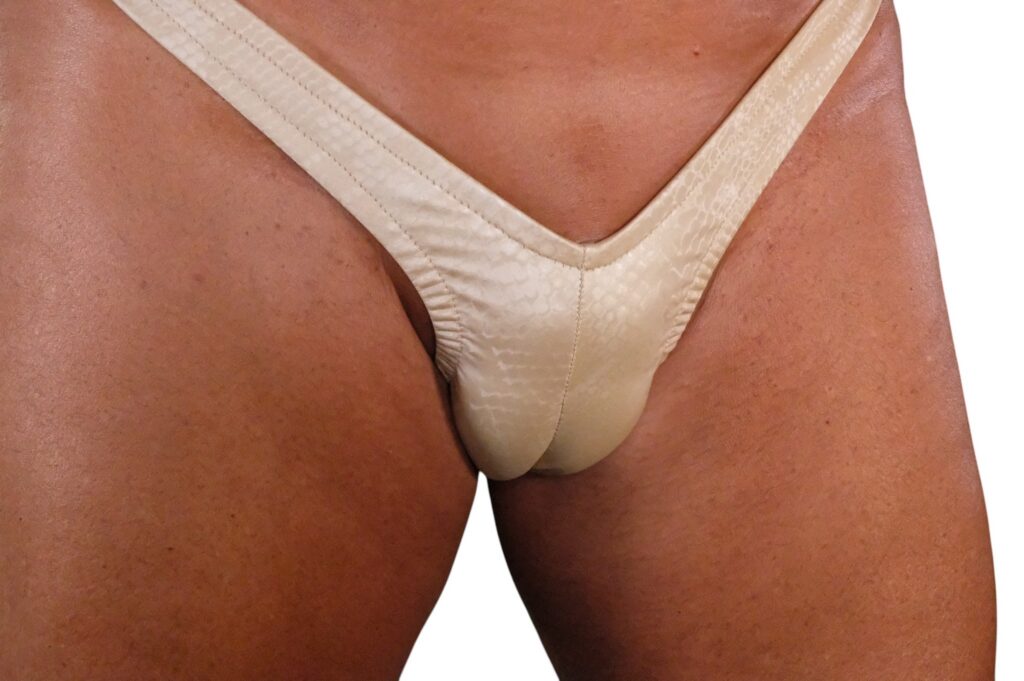
Non-Surgical Male-to-Female Genital Feminization: MTF Swimwear, Tucking and Other Options
For someone who wants a more feminine appearance without genital surgery, there are now numerous ways to change how the genital area looks, sits, and appears beneath clothing. These approaches are used by some transgender women, gender-fluid people, crossdressers, femboys, sissies, performers, and men who simply enjoy a feminine presentation.
FuFu Clips are one specialized approach, but they are far from the only option. Tucking, gaffs, MTF underwear, transformation swimwear, compression garments, prosthetic coverings, body shaping, and carefully selected clothing can all help create a flatter or more traditionally feminine silhouette.
The important distinction is between changing anatomy and changing appearance. These techniques do not create female genital anatomy. Instead, they temporarily reposition, conceal, compress, cover, or visually reshape existing anatomy.
1. Traditional Tucking
Tucking remains one of the most established methods of creating a flatter front.
The basic idea is to position the external genital tissue so that it produces much less forward projection and then use a supportive garment to hold everything securely in place.
A successful tuck can dramatically change the appearance of leggings, dresses, panties, bodysuits, and swimsuits. Instead of a prominent male-shaped bulge, the front can appear substantially flatter.
Tucking does not have to mean maximum compression. For everyday use, many people prefer a moderate tuck that balances appearance and comfort.
Pain, numbness, skin discoloration, or significant tingling are signals to stop and readjust rather than trying to tolerate additional pressure.
2. Gaffs
A gaff is a garment specifically designed to maintain a flatter genital profile.
Unlike ordinary panties, a good gaff provides strategically placed compression and support. This can make it considerably easier to maintain a tuck during normal movement.
Gaffs range from relatively substantial underwear to thong-style designs that disappear beneath tight clothing.
They can be particularly useful for people who want a repeatable feminine appearance without having to reconstruct an elaborate tuck every time they dress.
3. MTF Panties and Transformation Underwear
MTF underwear takes the concept further.
Rather than simply adapting conventional women’s underwear to male anatomy, these garments can be designed specifically around the needs of someone seeking a feminine silhouette.
Different designs emphasize different goals. Some flatten the front. Some provide stronger containment. Others visually reshape the area while maintaining enough room to avoid extreme compression.
This can be especially valuable because ordinary women’s panties were not designed to accommodate external male anatomy.
Specialized MTF underwear can therefore provide both a more feminine appearance and a more practical fit.
4. MTF Swimwear
Swimwear represents one of the biggest challenges in non-surgical feminization because there is very little fabric available to disguise body contours.
That is precisely why specialized MTF swimwear has developed.
Instead of emphasizing a conventional male pouch, these suits attempt to minimize or eliminate the visible forward projection. Some incorporate compression panels, reinforced linings, wider gussets, strategic seams, or internal support structures.
The result can be dramatically different from conventional men’s swimwear.
A standard men’s bikini generally accommodates and often emphasizes the genitals. An MTF bikini does the opposite: its objective is typically to create a smooth, feminine front.
For someone who wants to present femininely at a beach or pool, this difference can be particularly significant.
5. Tucking Swimsuits
Tucking swimwear combines the function of a gaff with the appearance of a swimsuit.
This can eliminate the need to wear a separate compression garment beneath a bikini.
Good designs need enough structure to maintain the desired position while still allowing swimming, walking, sitting, and ordinary movement.
Coverage also matters. A tiny bikini that looks excellent while standing still may not provide sufficient security during swimming or vigorous activity. For first-time users, slightly greater coverage can make experimentation easier.
6. No-Tuck Feminizing Designs
Not everyone wants to tuck.
Some people find conventional tucking uncomfortable, while others simply want something faster and easier.
That has created interest in no-tuck feminizing underwear and swimwear.
These designs use compression, strategic shaping, layering, and garment construction to minimize the male profile without requiring the same degree of anatomical repositioning.
The result may not be as completely flat as a strong tuck, but it can provide a convincing feminine silhouette while being considerably easier to wear.
7. Compression Garments
Compression can also be incorporated into bodysuits, shapewear, panties, dancewear, and other garments.
The objective should be secure support rather than extreme pressure.
This distinction matters because tighter does not automatically mean more feminine. Excessive compression can cause discomfort and make a garment impractical for prolonged wear.
A well-designed garment distributes pressure rather than concentrating it on one small area.
8. Prosthetic Vulva Covers and Feminine Overlays
Another category approaches the problem from the opposite direction.
Instead of merely hiding male contours, a prosthetic or silicone overlay can create the external visual appearance of a vulva.
These products vary greatly in realism and construction. Some are primarily costume or photographic prosthetics. Others are incorporated into underwear or bodysuits.
The underlying anatomy remains unchanged, but when properly fitted, a prosthetic can provide a different external appearance.
This approach may appeal particularly to someone whose objective is visual transformation rather than simply achieving a flat front.
9. Feminizing Bodysuits
Full or partial silicone bodysuits take prosthetic transformation even further.
Depending on their construction, they can alter the apparent breasts, waist, hips, buttocks, skin surface, and genital region simultaneously.
This makes them very different from tucking.
Tucking modifies one visible contour. A transformation bodysuit can change much of the body’s apparent sexual silhouette at once.
The tradeoff is practicality. Bodysuits can be expensive, warm, difficult to put on, and unsuitable for many everyday activities.
For occasional transformations, however, they can produce a striking visual effect without permanent anatomical changes.
10. Clothing Can Do More Than People Realize
Genital feminization is also affected by everything surrounding the genital area.
High-waisted clothing can alter proportions. Skirts can remove attention from the crotch completely. Certain bikini bottoms visually widen the hips. Shapewear can narrow the waist while adding apparent volume around the hips and buttocks.
This illustrates an important principle of feminization:
People perceive the complete silhouette, not one body part in isolation.
A relatively modest genital transformation combined with feminine waist, hip, chest, hair, face, and clothing cues can sometimes produce a more convincing overall appearance than concentrating exclusively on making the crotch perfectly flat.
11. Hip and Buttock Shaping
Hip pads and padded underwear can dramatically alter the relationship between the waist, hips, and genital region.
A wider hip line makes the pelvis appear differently proportioned. Combined with a flatter front, this can create a much more traditionally feminine silhouette.
Some shaping garments combine several functions, providing hip enhancement, buttock enhancement, waist compression, and front smoothing in a single garment.
This makes them useful for people interested in comprehensive non-surgical transformation.
12. Body-Hair Removal
Hair removal can make a surprisingly large visual difference.
Trimming, shaving, waxing, epilation, laser hair reduction, and electrolysis are all possibilities depending on the body area and whether temporary or longer-lasting results are desired.
Removing visible hair from the bikini line, thighs, abdomen, buttocks, chest, and legs can reinforce a feminine presentation, particularly when wearing revealing swimwear.
Hair removal doesn’t alter genital anatomy, but it changes the visual context considerably.
13. Hormone Therapy Is Different From Clothing-Based Feminization
Gender-affirming hormone therapy can produce genuine physical changes, but it belongs in a different category from temporary transformation techniques.
Estrogen-based therapy with androgen suppression can, depending on the individual and treatment, affect body-fat distribution, skin, muscle mass, erections, testicular volume, breast development, and other characteristics.
It should therefore not be thought of as a stronger version of tucking or specialized swimwear. It is medical treatment with systemic effects and should be managed with an appropriately qualified healthcare professional.
Someone who wants only an occasional feminine appearance may prefer completely reversible clothing and presentation techniques.
Someone pursuing broader physical transition may have different goals.
14. Combining Techniques Produces the Biggest Transformation
Non-surgical feminization rarely depends upon one product or technique.
Someone might combine:
hair removal + tucking + an MTF gaff + hip shaping + breast forms + feminine clothing + makeup + hairstyle.
At the beach, the combination could instead be:
grooming + a comfortable tuck + MTF bikini + hip-enhancing cut + feminine accessories and presentation.
Each component changes one part of the visual picture.
Together they can create a much more comprehensive transformation.
15. Choosing Between Flat, Feminine and Anatomically Feminine Looks
It is helpful to distinguish three different objectives.
A flat appearance attempts primarily to eliminate the conventional male bulge.
A feminine silhouette combines front flattening with changes to the waist, hips, buttocks, chest, grooming, and clothing.
An anatomically feminine visual effect goes further by using prosthetics or specialized garments intended to create the external visual suggestion of female genital anatomy.
These objectives require different products and techniques.
Someone who only wants leggings to fit smoothly probably does not need the same equipment as someone creating a complete MTF transformation for photography or performance.
16. Experiment Before Going Public
The best technique is usually the one that remains comfortable and secure during real activity.
Before wearing a new tucking technique or MTF swimsuit to a beach, pool, club, or other public environment, test it privately.
Walk around. Sit down. Bend over. Climb stairs. If it is swimwear, see how it behaves when wet and during movement.
The objective isn’t simply achieving a convincing appearance while standing in front of a mirror.
The transformation needs to remain practical.
Non-Surgical Feminization Offers a Huge Range of Possibilities
Surgery is not the only way someone can create a dramatically different gender presentation.
Modern feminization can range from something as simple as wearing a smoothing panty to a comprehensive transformation involving tucking, MTF underwear, specialized swimwear, shapewear, prosthetics, breast forms, hip shaping, grooming, makeup, and feminine clothing.
FuFu Clips represent one specialized option within this much larger world.
For people who don’t want to use them, traditional tucking, gaffs, MTF swimsuits, no-tuck garments, compression underwear, prosthetic overlays, and body-shaping products provide numerous alternatives.
Most importantly, non-surgical techniques allow experimentation.
Someone can discover whether they prefer merely reducing a bulge, creating a completely flat front, developing a feminine body silhouette, or pursuing a much more comprehensive MTF presentation—all without permanently altering their anatomy.
For many people exploring femininity, that reversibility is precisely what makes non-surgical transformation so valuable.