Men Being Feminized: The Complete Guide to Male Feminization, MTF Transformations, and FuFu Clips
Understanding Why Men Embrace Feminization and How MTF Clothing, Swimwear, Tucking, and FuFu Clips Can Create a Feminine Appearance
Male feminization is an increasingly visible part of contemporary gender expression, alternative fashion, crossdressing, and personal transformation. Men from many different backgrounds are discovering that they enjoy looking feminine, wearing women’s clothing, experimenting with male-to-female (MTF) transformation products, and sometimes presenting themselves as women.
For some, feminization begins with something simple: trying on panties, shaving their legs, or wearing a feminine swimsuit. For others, it becomes a much more complete transformation involving makeup, hairstyles, body shaping, lingerie, and specialized products designed to minimize or conceal male genital anatomy.
One particularly interesting category is MTF feminization products, including FuFu Clips, which are marketed to create the visual impression of female genital anatomy without surgery.
These products appeal to some crossdressers, feminine men, sissies, femboys, and transfeminine people who want a more traditionally feminine appearance while retaining their existing anatomy.
Unlike permanent medical procedures, clothing-based feminization allows individuals to experiment with different appearances and styles.
In this complete guide, we explore why men enjoy being feminized, the different levels of transformation, how MTF swimwear and underwear work, what FuFu Clips are designed to do, their limitations and safety considerations, and how partners can participate in the feminization experience.
What Does It Mean for a Man to Be Feminized?
Male feminization describes the process of adopting characteristics, clothing, grooming practices, or physical presentation traditionally associated with women.
The degree of feminization varies considerably.
Some men enjoy a subtle feminine appearance, while others want to create a convincing female presentation from head to toe.
Feminization may include:
- Wearing feminine panties, lingerie, dresses, skirts, and swimsuits.
- Removing or reducing facial and body hair.
- Learning makeup and feminine hairstyling techniques.
- Using breast forms, hip padding, or body-shaping garments.
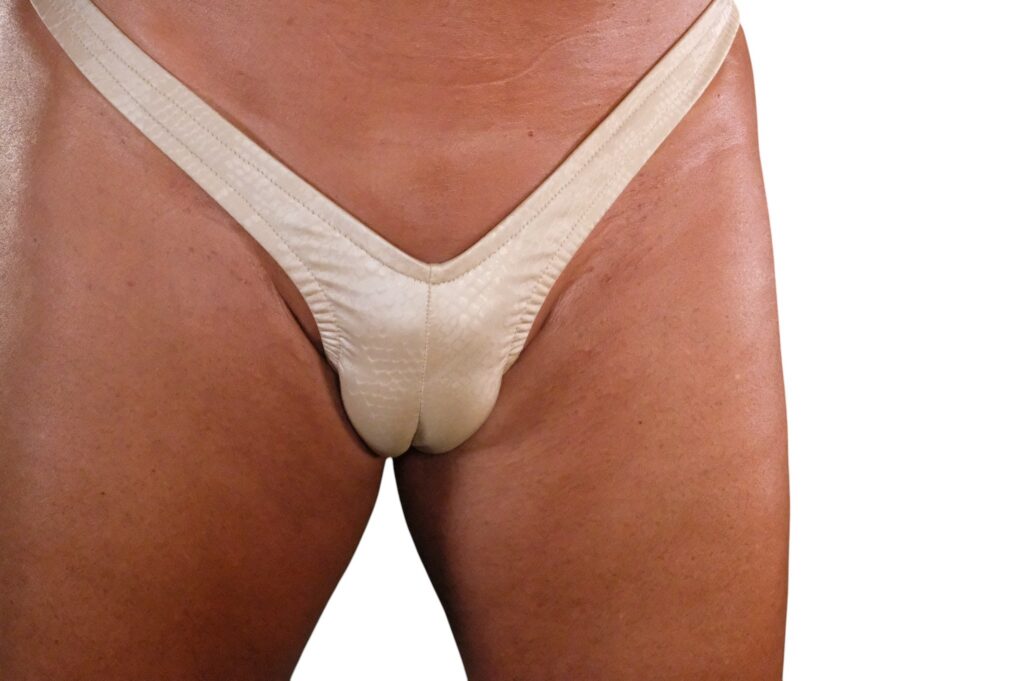
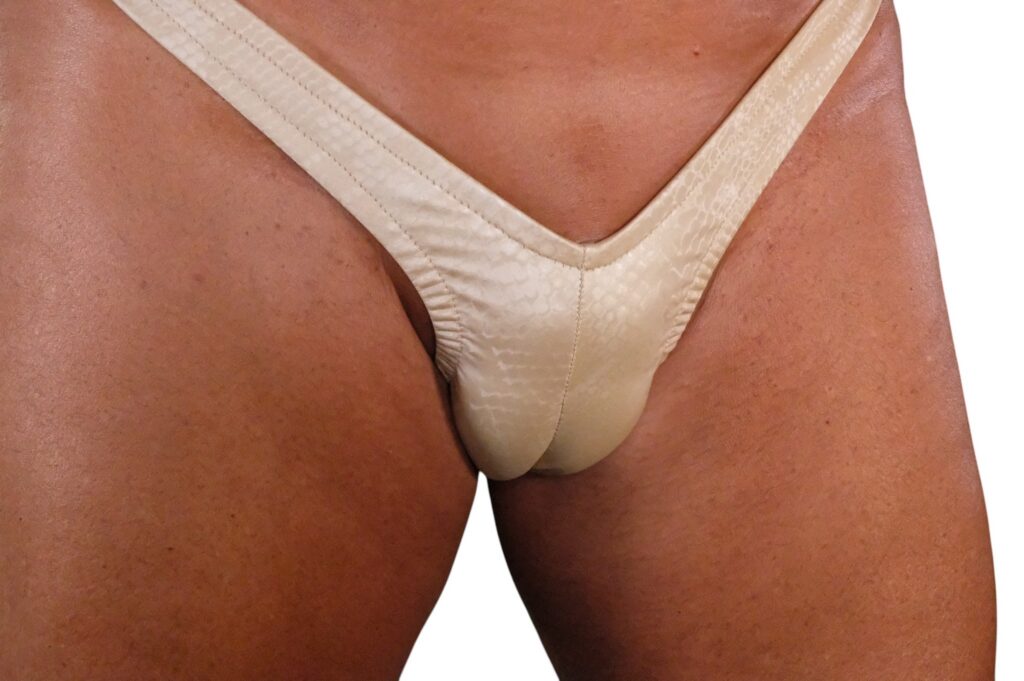
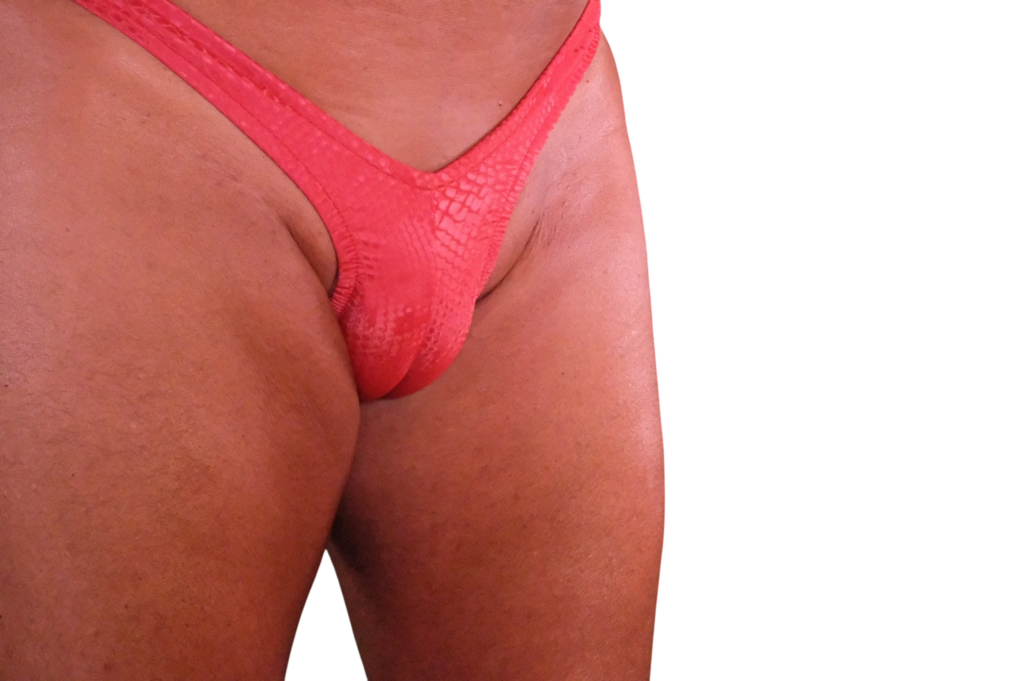
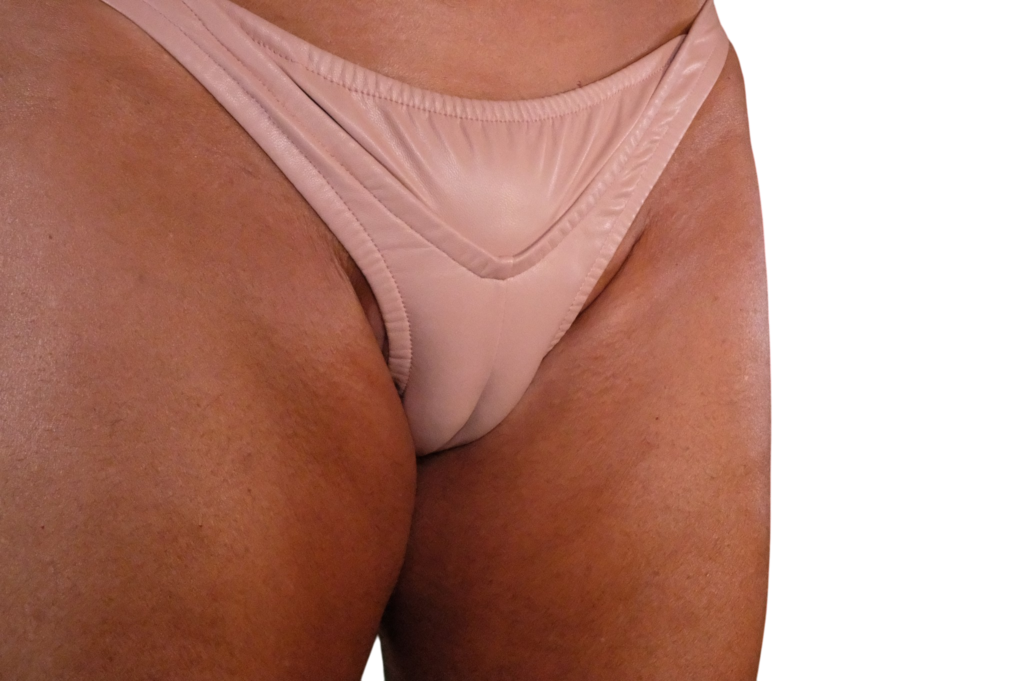
- Wearing MTF transformation underwear or swimwear.
- Using tucking techniques to reduce the appearance of male genital anatomy.
- Experimenting with FuFu Clips and other external feminization accessories.
- Adopting feminine names, pronouns, or social presentation when desired.
- Exploring consensual feminization with a wife, girlfriend, husband, or boyfriend.
Not everyone who enjoys feminization identifies as transgender.
A man may remain completely comfortable identifying as male while enjoying feminine clothing and presentation.
Others may discover that feminization helps them understand a nonbinary or transgender identity.
There is no single correct way to experience femininity.
Why Are Some Men Interested in Being Feminized?
The reasons are as varied as the individuals themselves.
1. Freedom from traditional masculine expectations
Men often encounter expectations to appear strong, competitive, dominant, and conventionally masculine.
For some, feminine presentation offers freedom from those expectations.
They enjoy expressing softness, elegance, beauty, or vulnerability without feeling obligated to conform to traditional masculine roles.
2. Enjoyment of feminine fashion
Women’s clothing offers a wide variety of styles, fabrics, colors, and silhouettes.
A man may simply enjoy the feel of lingerie, the appearance of a bikini, or the styling possibilities of dresses and skirts.
3. The excitement of transformation
For some people, changing their appearance is personally exciting.
The experience of looking in a mirror and seeing a dramatically different presentation can be emotionally meaningful.
4. Exploring gender identity
Some individuals use feminization to explore whether a more feminine gender expression feels authentic.
This may be temporary experimentation or part of a longer journey toward understanding their identity.
5. Consensual relationship dynamics
Some couples enjoy feminization as a shared activity.
A wife, girlfriend, husband, or boyfriend may help select clothing, apply makeup, or encourage a more feminine appearance.
Other couples incorporate feminization into consensual dominance and submission.
6. Enjoying a feminine genital silhouette
For some individuals, one of the most important aspects of feminization is creating a smooth or traditionally feminine appearance beneath underwear and swimwear.
This interest has encouraged the development of specialized MTF garments, tucking products, and external accessories such as FuFu Clips.
MTF FuFu Clips: Understanding the Non-Surgical Feminization Concept
What Is a FuFu Clip?
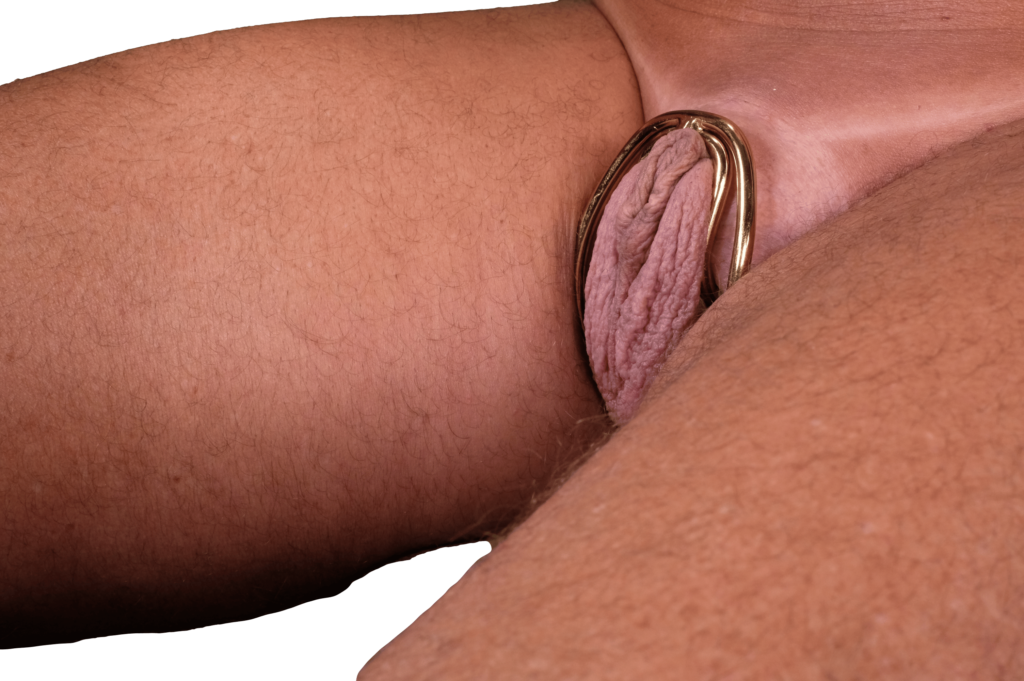
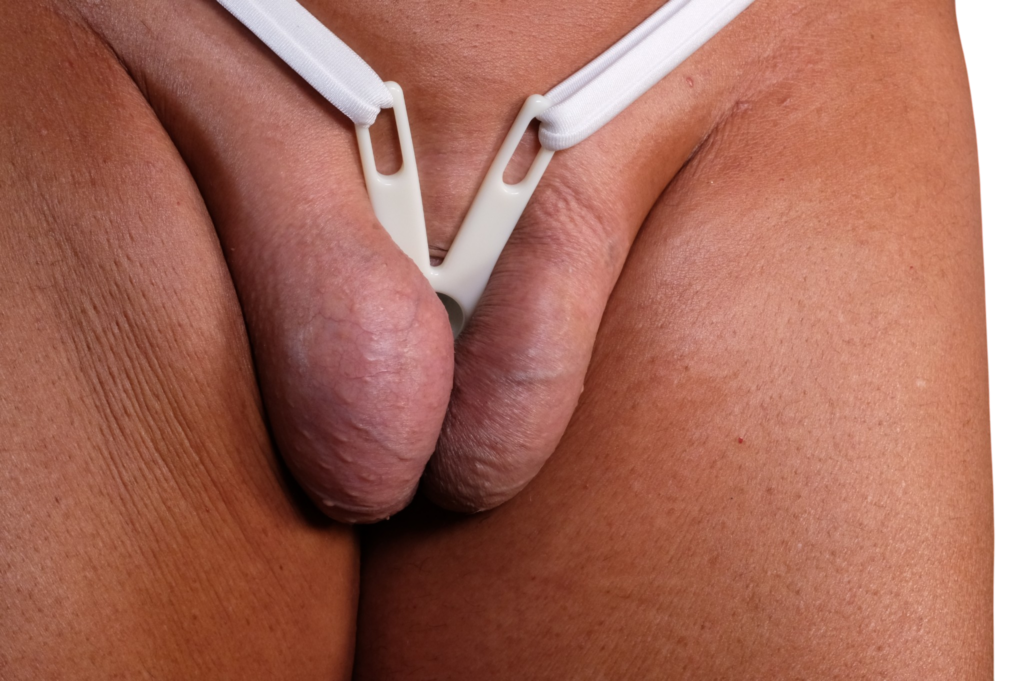
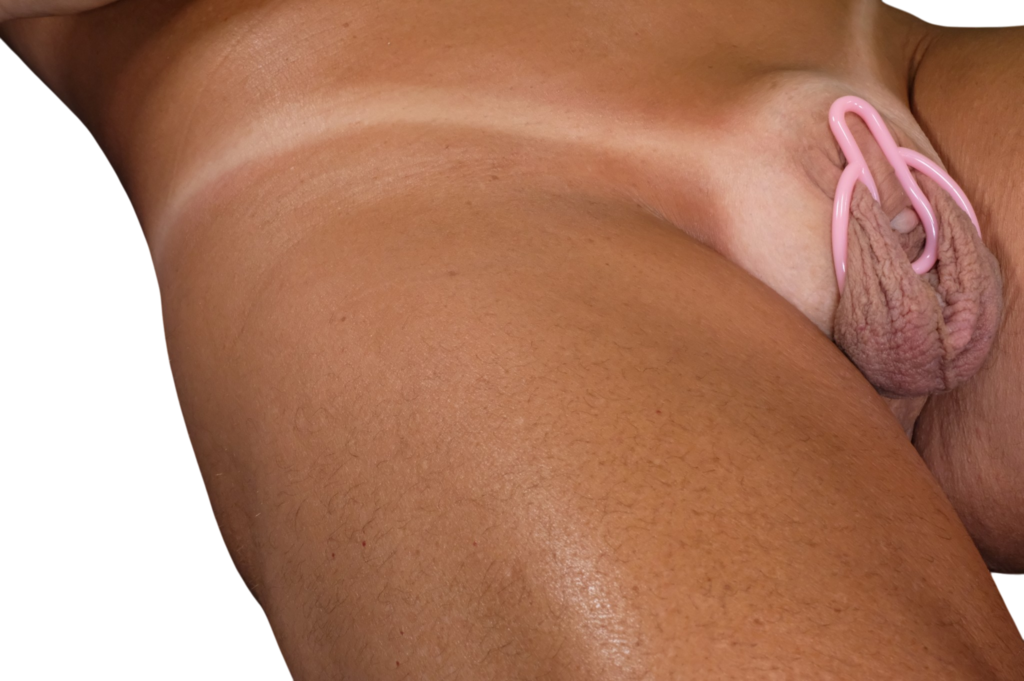
A FuFu Clip is a specialty external genital-feminization accessory marketed to help create the visual appearance of female external genital anatomy.
The name is used in the adult feminization product market, including products associated with specialty retailers such as Koalaswim.com.
Rather than permanently changing anatomy, a FuFu Clip is intended to reposition and visually conceal portions of the external genital tissue to produce a different outward appearance.
Some product descriptions emphasize creating a feminine-looking front, including the suggestion of a vulva or labial contours.
The objective is primarily cosmetic.
A FuFu Clip does not create a vagina, alter biological sex, or reproduce the anatomy and function of female genital structures.
It is also important to distinguish a product’s advertised appearance from what can reliably be achieved in practice. Results depend on anatomy, product construction, fit, and positioning, and there is limited independent clinical evidence evaluating these devices.
Why Are FuFu Clips Appealing to Some Feminized Men?
For individuals who enjoy a feminine genital appearance, conventional women’s underwear may not create the silhouette they want.
Ordinary panties can reveal a genital bulge, particularly when made from thin or tightly fitted material.
Some men are comfortable with that appearance. Others prefer a flat or traditionally feminine front.
FuFu Clips are marketed to address this aesthetic preference.
Their appeal can involve several goals.
A more feminine appearance: Some wearers want their external genital profile to look less conventionally male.
Non-surgical experimentation: A removable accessory offers a temporary visual change rather than permanent anatomical alteration.
Compatibility with feminine fashion: Some people seek a smoother appearance under lingerie or fitted clothing.
Personal gender expression: A different genital silhouette may help certain individuals feel more comfortable with their feminine presentation.
A shared feminization experience: Some consenting couples enjoy exploring different clothing and transformation accessories together.
For some people, the visual effect is central to the experience. For others, the accessory is simply one option among many.
How Do MTF FuFu Clips Work?
FuFu Clips are generally described as external devices that hold or reposition soft genital tissue to reduce the appearance of a conventional penile profile and create a more feminine-looking contour.
The exact mechanism varies by product design.
Some descriptions refer to bringing portions of tissue into a position that resembles external vulvar folds.
However, because the term FuFu Clip may refer to different product variations, there is no single fitting procedure that can safely be applied to every design.
The product should not be confused with conventional tucking underwear.
Tucking garments generally rely on fabric construction and gentle compression to create a smoother silhouette.
A FuFu Clip uses a more localized mechanical approach, potentially concentrating pressure on sensitive tissue.
That difference is important for both comfort and safety.
What a FuFu Clip can potentially accomplish
Depending on the product and the wearer’s anatomy, it may temporarily change the appearance of the external genital area, reduce the visibility of a penile outline, or produce contours intended to resemble female external genital anatomy.
What a FuFu Clip cannot accomplish
It cannot create a vaginal canal, permanently convert genital anatomy, provide the biological function of female genital structures, or substitute for medical gender-affirming treatment.
A convincing appearance in a photograph or beneath a garment does not necessarily mean the product is comfortable or safe for extended wear.
FuFu Clips Versus Traditional Tucking: What Is the Difference?
Although both approaches may be used for feminization, they are not identical.
| Feature | FuFu Clip | Tucking underwear or gaff |
|---|---|---|
| Main purpose | Create a shaped, feminine-looking genital contour | Minimize visible genital bulge |
| Method | Localized external tissue positioning | Garment support and compression |
| Visual result | May suggest vulvar contours | Usually smooth or flat |
| Permanent changes | None intended | None intended |
| Fit considerations | Device-specific, with possible pressure points | Proper sizing and gentle compression |
| Evidence of safety | Limited independent data | More established practical guidance, though risks remain |
| Suitability for extended wear | Not established | Depends on fit, comfort, and breaks |
For someone seeking a smooth appearance under a dress or swimsuit, a properly fitted tucking garment may be the more practical starting point.
For someone specifically interested in a shaped vulvar appearance, specialty devices may seem appealing, but the potential for localized injury deserves careful consideration.
Understanding FuFu Clip Styles and Designs
Specialty feminization accessories are not all constructed the same way.
Products marketed under terms such as FuFu Clip, feminizer clip, or female-conversion clip may differ in their shapes, dimensions, materials, and intended visual results.
External contour-shaping designs
Some devices are marketed primarily for changing the visible outline of external genital tissue.
Their purpose is to create a feminine-looking appearance without a full genital tuck.
Minimal-profile designs
Other products emphasize reducing projection so that the front of the body appears flatter beneath clothing.
These may appeal to people who want a less noticeable genital outline rather than pronounced feminine contours.
Feminine-contour accessories
Some designs are marketed around the visual appearance of external vulvar folds.
These products should be understood as cosmetic shaping accessories rather than anatomical transformations.
Clothing-integrated alternatives
Some MTF panties and swimsuits use fabric shaping, padding, or specialized construction to create the appearance of a feminine front without attaching a separate device directly to genital tissue.
For many wearers, this approach may offer a more practical way to achieve a similar aesthetic.
FuFu Clip Safety: What Every Potential Wearer Should Understand
Because FuFu Clips may apply pressure to delicate genital tissue, safety is particularly important.
There is no well-established clinical standard demonstrating that every device sold under this name is safe.
Potential problems include skin irritation, pinching, bruising, restricted circulation, nerve compression, swelling, and injury to delicate tissue.
A device should never be forced into position.
Pain, numbness, tingling, unusual discoloration, coldness, or swelling are warning signs rather than normal parts of feminization.
If any of these symptoms occur, the device should be removed promptly if it can be removed safely. Persistent symptoms, significant swelling, severe pain, or inability to urinate require urgent medical evaluation.
Important precautions
- Do not use a device that requires painful pressure or force.
- Avoid products with sharp edges, rough surfaces, or questionable materials.
- Never use adhesives, improvised clamps, or household clips as substitutes.
- Do not wear an unverified genital compression device while sleeping.
- Avoid combining a tight device with additional restrictive compression.
- Do not assume a product is suitable for swimming, exercise, or extended wear.
- Follow the specific manufacturer’s cleaning and care instructions.
- Seek medical guidance if you have circulation problems, altered genital sensation, recent surgery, or relevant skin conditions.
A product marketed for feminization is not automatically medically tested or suitable for prolonged use.
A successful cosmetic transformation should never come at the expense of circulation, sensation, skin integrity, or urinary function.
MTF Swimwear and FuFu Clips: Creating a Feminine Beach Appearance
One of the most appealing aspects of modern MTF fashion is the range of swimwear designed for different forms of gender expression.
Traditional men’s swimwear generally accommodates the natural outline of male genital anatomy.
Some styles emphasize that outline with prominent pouches.
MTF swimwear takes a different approach.
It may be designed to minimize the bulge, create a smooth front, or produce the visual impression of female external genital anatomy.
Different MTF swimsuit designs
Flat-front MTF bikinis
These swimsuits use specialized garment construction to reduce visible projection.
They may be appropriate for wearers who want a smooth silhouette without using a separate shaping device.
Tucking bikini swimsuits
Tucking swimwear provides support intended to maintain a flatter front.
Some designs resemble conventional women’s bikini bottoms.
Feminine-contour swimsuits
These styles use garment construction or shaping elements to suggest a feminine genital contour.
The visual effect varies considerably by design.
Micro and ultra-micro MTF swimwear
Some specialty retailers offer extremely minimal swimwear with feminine styling.
These designs emphasize reduced coverage, narrow panels, and a small front profile.
However, minimal coverage can make secure fit more challenging. A swimsuit should provide appropriate coverage and remain stable during movement.
Can a FuFu Clip be worn under MTF swimwear?
Some products are marketed with that possibility in mind, but compatibility should never be assumed.
Tight swimwear may increase pressure from an underlying device. Swimming, walking, sitting, and changes in body position can also affect fit.
A FuFu Clip that appears comfortable while standing still may create pressure points during movement.
There is insufficient independent safety evidence to recommend routine use of such devices during swimming or extended public wear.
For a feminine swimsuit appearance, a garment designed to create the desired contour on its own is often a more straightforward alternative.
Koalaswim.com and the Evolution of MTF Transformation Swimwear
Specialty swimwear retailers such as Koalaswim.com have developed product categories that go beyond conventional men’s bikinis, thongs, and G-strings.
These include micro-bulge styles, gender-neutral designs, tucking garments, and MTF transformation swimwear.
The variety reflects different aesthetic preferences.
Some customers want a conventional masculine pouch. Others prefer an extremely small bulge. Still others want a completely smooth front or a swimsuit designed to create a feminine-looking silhouette.
FuFu Clips and related accessories represent another part of this broader non-surgical feminization market.
Rather than assuming that every customer wants the same appearance, specialized designs offer different options for people exploring masculine, feminine, and gender-neutral presentation.
Men Being Feminized by Their Wives, Girlfriends, and Boyfriends
Feminization is not always an individual experience.
Some couples enjoy exploring it together.
A husband may reveal that he has wanted to dress femininely for years. His wife may respond with curiosity and eventually enjoy helping him develop a feminine wardrobe.
A boyfriend may find his partner’s feminine appearance attractive and encourage him to explore different styles.
Others participate simply because they want to support someone they love.
How partners can help with feminization
A supportive partner might help select feminine underwear, offer makeup advice, suggest hairstyles, or accompany the individual shopping.
Couples may experiment with different outfits at home before deciding whether to wear them publicly.
Some enjoy comparing traditional men’s swimwear with flat-front or feminine-contour designs.
Others explore a more complete feminine appearance involving clothing, grooming, body shaping, and accessories.
The important principle is consent.
A partner should not be pressured into feminization, and the person being feminized should retain control over their body and presentation.
When feminization becomes part of a female-led relationship
Some couples incorporate feminine presentation into consensual power exchange.
A wife may enjoy choosing outfits for her husband, establishing agreed-upon grooming routines, or encouraging a more feminine role.
Other couples may enjoy playful teasing or role reversal.
These activities are optional and separate from gender identity.
A man can enjoy feminization without being submissive, and a submissive man does not necessarily want to appear feminine.
The Different Levels of Male Feminization
For men who are interested in exploring femininity, it can be useful to think about different approaches rather than treating feminization as a single destination.
Level One: Feminine underwear and private clothing
Some men begin with panties, lingerie, or feminine sleepwear.
This allows experimentation without changing public presentation.
Level Two: Grooming and appearance
Hair removal, skincare, nail polish, and makeup can create a more traditionally feminine appearance.
A man may begin experimenting with different hairstyles or accessories.
Level Three: Feminine fashion
Dresses, skirts, leggings, fitted tops, and feminine swimwear allow a more complete presentation.
Some men prefer subtle feminine styling, while others enjoy dramatic transformations.
Level Four: Body shaping
Breast forms, padded bras, hip padding, and shapewear can help create a traditionally feminine silhouette.
These are removable and do not require medical treatment.
Level Five: Feminine genital presentation
Some individuals explore tucking underwear, flat-front MTF swimwear, or feminine-contour garments.
Others become interested in specialty accessories such as FuFu Clips.
Because direct genital shaping devices can create safety risks, comfort and medical considerations become particularly important at this stage.
Level Six: Social feminization
Some men enjoy presenting femininely outside the home.
This may involve choosing a feminine name, changing pronouns, or wearing feminine clothing in social settings.
Others prefer to keep their feminine expression private.
Level Seven: Exploring medical transition
For some people, gender exploration eventually leads to an interest in hormone therapy or gender-affirming procedures.
Medical transition is a separate decision requiring individualized medical advice.
It is not a necessary or inevitable outcome of feminization.
Why Some Men Want a Completely Feminine Genital Appearance
For certain individuals, changing the appearance of the genital area is a particularly meaningful part of feminization.
A man may enjoy feminine clothing but feel that a visible penile bulge conflicts with the silhouette he wants.
Others simply prefer a smooth or traditionally feminine-looking front.
For some transfeminine individuals, this preference is connected to gender dysphoria.
For others, it is an aesthetic, fashion, or erotic preference.
These motivations should not be confused.
Someone who enjoys a feminine genital silhouette does not necessarily want surgery, and someone who wants medical transition may have little interest in cosmetic accessories.
The growing variety of MTF underwear and swimwear provides more choices for these different preferences.
FuFu Clips, Tucking Panties, and MTF Transformation Garments: Choosing the Right Approach
The best option depends on the appearance someone wants, how long the garment will be worn, and the level of comfort required.
For everyday feminine clothing, properly fitted panties or shapewear may be sufficient.
For a flatter appearance, purpose-designed tucking underwear may be appropriate.
For swimming, an MTF swimsuit that achieves the desired silhouette without a separate mechanical device may be preferable.
For those interested specifically in FuFu Clips, it is important to understand that their advertised visual results are not equivalent to established safety or performance evidence.
Before considering one, examine the manufacturer’s instructions, materials, sizing information, cleaning recommendations, and warnings.
If the product relies on strong pressure, causes discomfort, or lacks clear safety information, it is better not to use it.
The Emotional Experience of Becoming More Feminine
For some men, feminization is much more than changing clothing.
It can involve overcoming years of embarrassment or uncertainty.
A man who has always been fascinated by feminine fashion may feel tremendous relief when he finally allows himself to explore it.
A married man may discover that his wife accepts a part of him he previously kept hidden.
A boyfriend may appreciate seeing his partner become more confident.
Some men find that feminine presentation makes them feel attractive in ways they never experienced with conventional masculine clothing.
Others enjoy the freedom of moving between masculine and feminine appearances.
The emotional rewards are personal and cannot be measured simply by how convincingly someone looks female.
A feminine man does not need to pass as a woman to have a successful or meaningful experience.
Frequently Asked Questions About Male Feminization and FuFu Clips
What is the main purpose of a FuFu Clip?
A FuFu Clip is marketed as an external accessory for temporarily changing the visible appearance of male genital tissue to create a more feminine-looking contour.
Does a FuFu Clip turn a penis into a vagina?
No. It may change the outward appearance of tissue, but it does not create female genital anatomy or a vaginal canal.
Is a FuFu Clip permanent?
No. It is intended as a removable cosmetic accessory, not a permanent anatomical change.
Can someone with a small penis use a FuFu Clip?
Suitability depends on the specific product and individual anatomy. A smaller penis does not automatically make a device safe or effective.
Can someone with a larger penis use one?
The same considerations apply. The amount of tissue, product dimensions, and pressure distribution affect fit. Forceful positioning should always be avoided.
Is a FuFu Clip the same as a tucking gaff?
No. A gaff is a supportive garment intended to minimize visible genital projection. A FuFu Clip is a separate mechanical accessory intended to alter the visible tissue contour.
Can FuFu Clips be used with MTF panties?
Some products are marketed for use with feminine underwear, but layering compression can increase pressure and irritation. Compatibility and safety should not be assumed.
Can I swim while wearing a FuFu Clip?
There is insufficient independent safety information to recommend swimming with these devices. Purpose-designed MTF swimwear may be a more practical choice.
Can a straight man enjoy MTF feminization?
Yes. Gender expression and sexual orientation are separate. A heterosexual man can enjoy feminine clothing and presentation without changing his sexual orientation.
Do FuFu Clips replace gender-affirming surgery?
No. They are temporary cosmetic accessories and cannot provide the anatomical or functional outcomes of surgery.
Can a wife or boyfriend help with feminization?
Yes. Partners can assist with clothing, grooming, makeup, and selecting garments, provided everyone involved is comfortable and consenting.
Is it necessary to use a FuFu Clip to look feminine?
Not at all. Many people create feminine appearances using clothing, makeup, hairstyling, breast forms, shapewear, and specialized underwear.
The Future of Male Feminization and MTF Fashion
Feminine fashion for male-bodied wearers is no longer limited to conventional women’s clothing.
Specialized products now offer a range of silhouettes, including traditional masculine pouches, reduced-bulge fronts, gender-neutral designs, and feminine-contour garments.
This diversity is particularly visible in specialty underwear and swimwear.
A person who wants to look masculine one day and feminine the next can choose garments that support either presentation.
Someone who wants to retain a masculine identity while wearing feminine swimwear has options.
A transfeminine person who wants a smoother silhouette without surgery can explore purpose-designed garments.
FuFu Clips illustrate the interest in more specialized cosmetic transformation, although better independent research would be needed to establish their safety and effectiveness.
Future developments may include improved fabrics, more comfortable shaping garments, and greater attention to different body types and gender expressions.
Conclusion: Men Being Feminized Is About Choice, Expression, and Personal Transformation
Male feminization can mean many things.
For one man, it means wearing panties and enjoying a softer appearance.
For another, it means becoming comfortable wearing dresses, makeup, and feminine swimwear.
For someone else, it means experimenting with tucking garments, MTF transformation designs, or specialized accessories intended to create a traditionally feminine genital silhouette.
FuFu Clips occupy a distinctive place in this world because they are marketed as a non-surgical way to alter the outward appearance of genital anatomy. Their cosmetic appeal should be understood alongside the limits of what they can accomplish and the importance of avoiding tissue injury.
For men exploring feminization with their wives, girlfriends, husbands, or boyfriends, the experience can also become an opportunity for greater intimacy and shared self-expression.
The most important part of male feminization is not how completely someone can imitate a woman’s appearance. It is having the freedom to choose the appearance, clothing, and identity that feel right for them.
Whether someone enjoys subtle feminine clothing, MTF swimwear, a smooth genital silhouette, or a complete feminine presentation, there is no requirement to follow a particular path.
The goal is confidence, comfort, safety, and the freedom to explore femininity on one’s own terms.